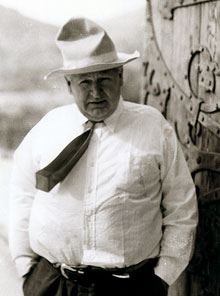
In the annals of American history, few tales resonate as vividly as that of Walter Scott, affectionately known as Death Valley Scotty. His audacity, charm, and sheer adventurous spirit made him an unforgettable figure amidst the relentless pursuit of wealth that characterized the Gold Rush era. The double-edged sword of his life — defined by deception yet underscored by loyalty — is a testament to the complexities of human relationships and the often-meandering paths of destiny.
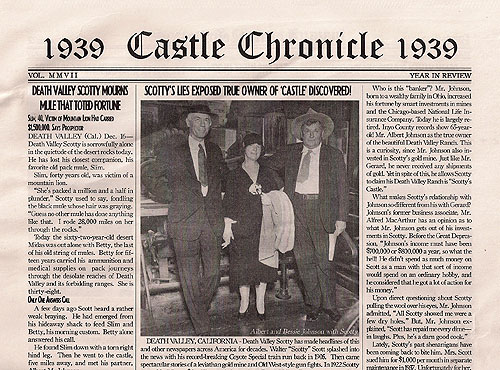
Scotty emerged as a charismatic rogue among the myriad prospectors who traversed the untamed landscapes of Nevada and California in the early twentieth century. While many fell prey to the harsh realities of the unforgiving desert, Scotty’s ingenuity paved a different route to survival. His skillful self-promotion caught the eye of Albert Johnson, a wealthy Chicago millionaire whose trust in Scotty would unravel into a saga that epitomizes both folly and fortune. Despite the evident absence of gold in Death Valley — a truth that Scotty was acutely aware of — he managed to secure financial backing from Johnson by weaving tales of a fictitious goldmine. This audacity raises profound questions about trust, persuasion, and the human inclination to believe in the extraordinary.
Scotty’s strategic exploitation of media attention was a vital part of his success. As he meandered through opulent hotels in major cities, leaving enormous tips and captivating stories in his wake, he became a sensation, drawing potential investors and opportunists to his side. The Gold Rush era was marked by a unique blend of hope and naivety; where dreamers thrived on the whispers of wealth and the tantalizing promise of untold riches. In an age devoid of rigorous vetting processes, Albert Johnson willingly lent his resources to Scotty, enticed by the promise of adventure and the allure of mythic discovery.
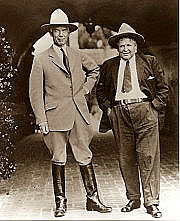
However, once Scotty’s financial woes were alleviated, he retreated into what one might generously call a “lifestyle of leisure.” The irony of his life is palpable: the man who wove an intricate web of deception ultimately found himself in possession of Henchman Johnson’s wealth—only to squander it in casinos and saloons, teetering on the precipice of recklessness. For Scotty, the thrill wasn’t merely the acquisition of wealth; it was the art of living—a connoisseur of experiences that danced along the edges of delight, debauchery, and reckless fun.
As the story unfolds, we are introduced to the steadfast figure of Albert Johnson—resilient, sharp-witted, and willing to embrace the uncertainty that came with his investment. A man hardened by life, having overcome personal tragedy, Johnson’s desire to see the famed goldmine underscores his yearning for proof of adventure. Yet, the skillful deception played out by Scotty illustrated an intriguing dynamic; a friendship built not solely on trust, but also on the understanding that greatness could come in many forms, including laughter.
The summer meeting in Death Valley, conducted amidst blistering temperatures, turned into a turning point for both men. In a fortuitous twist, the oppressive heat had a miraculous rejuvenating effect on Johnson’s health. The irony that the very place meant to shield Scotty from detection instead ended up nurturing the prosperous relationship between the two men is emblematic of life’s unpredictable nature. Johnson’s good-natured acceptance of Scotty’s fabrications, encapsulated in his light-hearted remarks about the “few holes in the ground,” transformed deceit into an enduring legacy of camaraderie.
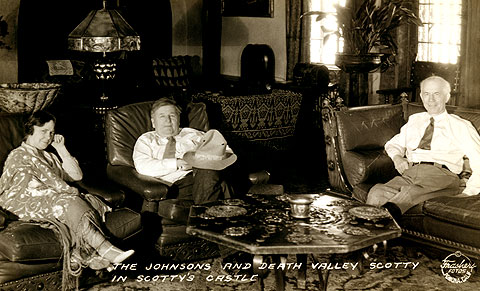
Ultimately, Scotty’s Castle — the splendiferous estate built on the basis of whimsical deception — stood as a monument to their unconventional friendship. More importantly, it served as a reflection of the human longing for connection, adventure, and the peculiar ways in which lives become intertwined. Scotty’s legacy goes beyond mere trickery; it embodies the unpredictable spirit of the American frontier, where dreams are exchanged for laughter, adventures unfold in uncanny ways, and every con carries the potential for sincere affection and undeniable loyalty.
In conclusion, the remarkable saga of Death Valley Scotty is a compelling narrative of risk and reward, deception and trust, encapsulated in the broader tapestry of American history. His exploits serve as a reminder that the lines between hero and rogue are often blurred, illustrating that sometimes, the greatest treasures are not the gold nuggets, but rather the friendships forged and the humor shared along the way. Scotty and Johnson’s bond, steeped in adventure and rich with irony, invites us to explore the multifaceted nature of human connection, even amidst the harshest landscapes.
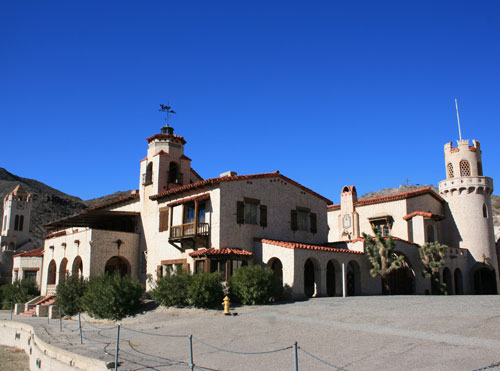
Scotty’s Castle (Dec 30, 2010)

The place for the ranch was not chosen by chance: there are only two sources of fresh water in the entire Death Valley, and this is one of them.
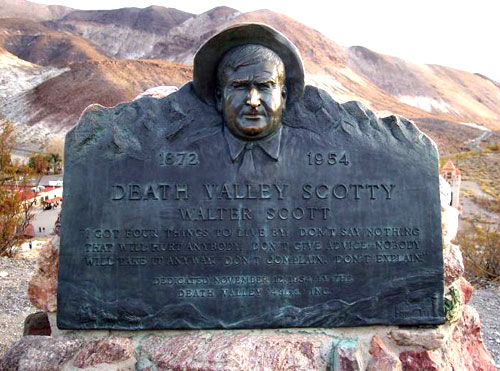
And this is what I call a healthy attitude towards swindlers, schemers, scammers. After all, this story could have a very different and very bad end for our happy little crook Scotty. Instead, he lived a long life and died peacefully in 1954. He was buried on the hill above the ranch. The epitaph on his tombstone reads:
WALTER SCOTT
I GOT FOUR THINGS TO LIVE BY: DON’T SAY NOTHING THAT WILL HURT ANYBODY. DON’T GIVE ADVICE – NOBODY WILL TAKE IT ANYWAY. DON’T COMPLAIN. DON’T EXPLAIN.
 VAABUS